
Losing files hits hard. Photos from family trips vanish. Work documents disappear overnight. This problem strikes millions each year. Free hdd backup software offers a straightforward fix for Windows users. It refers to no-cost programs that copy data from a computer’s hard drive to another storage spot, guarding against crashes or accidents.
Such tools prove vital because data loss stats show grim realities—67.7% of organizations face significant data loss (2025, USA). With 45% never recovering fully (2025, USA). Picking the right approach matters. Folks need to weigh storage options like hard drives against discs. Grasping backup types helps too. Setting schedules keeps things hands-off. Starting with a solid tool simplifies the process.
Regular backups prevent total data loss in unexpected events.
Backing up data effectively requires more than just picking a program. Users should follow clear steps to set up their first backup, understand the differences shown in the backup type table, and explore other essential tips for reliability.

HDD vs. DVD: Choosing the Right Backup Destination
Hard drives beat DVDs for most storage needs in backups. They hold massive amounts of info without fuss. Speed plays a big role here. Reliability tips the scales further. When considering free hdd backup software, remember that destination choice impacts overall effectiveness.
Weighing Capacity and Longevity
External hard disks pack terabytes these days. A single unit stores thousands of movies or photos. DVDs top out at about 4.7 gigabytes per disc—barely enough for a few high-res videos. Over time, optical media degrades from scratches or light exposure. Experts note that discs fail faster in humid spots. One study found DVDs lasting just five to ten years under ideal conditions (2011, Canada). In contrast, mechanical drives endure longer with proper care. Businesses often pick HDDs for this reason. Users wonder if mixing both works. Sure, but start with drives for daily use. For those using the best hdd backup software, HDDs allow seamless integration with larger datasets. Adding more examples, think about video editors who deal with raw footage—these pros swear by HDDs to avoid capacity headaches.
Speed and Ease of Access
Transferring files to a hard drive happens quickly via USB. Folks copy gigabytes in minutes. Burning to DVDs drags on, needing special software and blank media. Retrieval proves simpler from HDDs—just plug in and browse. Here’s why HDDs excel for speed and accessibility when paired with the best hdd backup software:
- Fast Transfers: USB 3.0 moves data at up to 5Gbps, copying a 10GB folder in under a minute. Even USB 2.0 handles it in a few minutes.
- No Extra Tools Needed: Unlike DVDs, which require burning software, HDDs work straight out of the box with Windows Explorer or free hdd backup software.
- Instant File Access: Plug in an HDD and browse files immediately—no waiting for disc readers to spin up or software to load.
- Scalable Storage: Add more drives as needed without swapping discs, perfect for growing data sets like video libraries.
Discs require readers that might vanish from new laptops. Cost-wise, drives drop in price yearly. A 1TB model runs under fifty bucks now. Blank DVDs cost pennies but add up for large collections. People ask about hybrid setups. Combining them covers bases—drives for quick access, discs for archives. When paired with the best hdd backup software, HDDs shine in real-time scenarios like quick restores during work hours. Pros share stories of clients saving hours by choosing drives over slower alternatives. For instance, a graphic designer restored a project in minutes using an HDD, while DVD retrieval took over an hour due to disc swapping.
Picking the Best Option Step by Step
First, check data volume. Measure folders in Windows Explorer. If over 100GB, grab an external HDD. Second, consider portability. Drives fit in pockets easily. Third, test connections. Ensure USB ports match. Fourth, factor in environment. Keep devices cool and dry. Pros recommend the 3-2-1 rule: three copies total, two different types, one offsite. This guards against failures. Users question DVD durability. They work for small, infrequent saves but falter long-term. Integrating free hdd backup software here ensures the process stays user-friendly. More tips include labeling cables to avoid mix-ups during setup.
In the end, hard drives win for everyday backups due to space and speed. DVDs suit niche cases like mailing data. Choose based on needs to avoid regrets. This decision ties directly into selecting the best hdd backup software for optimal performance.
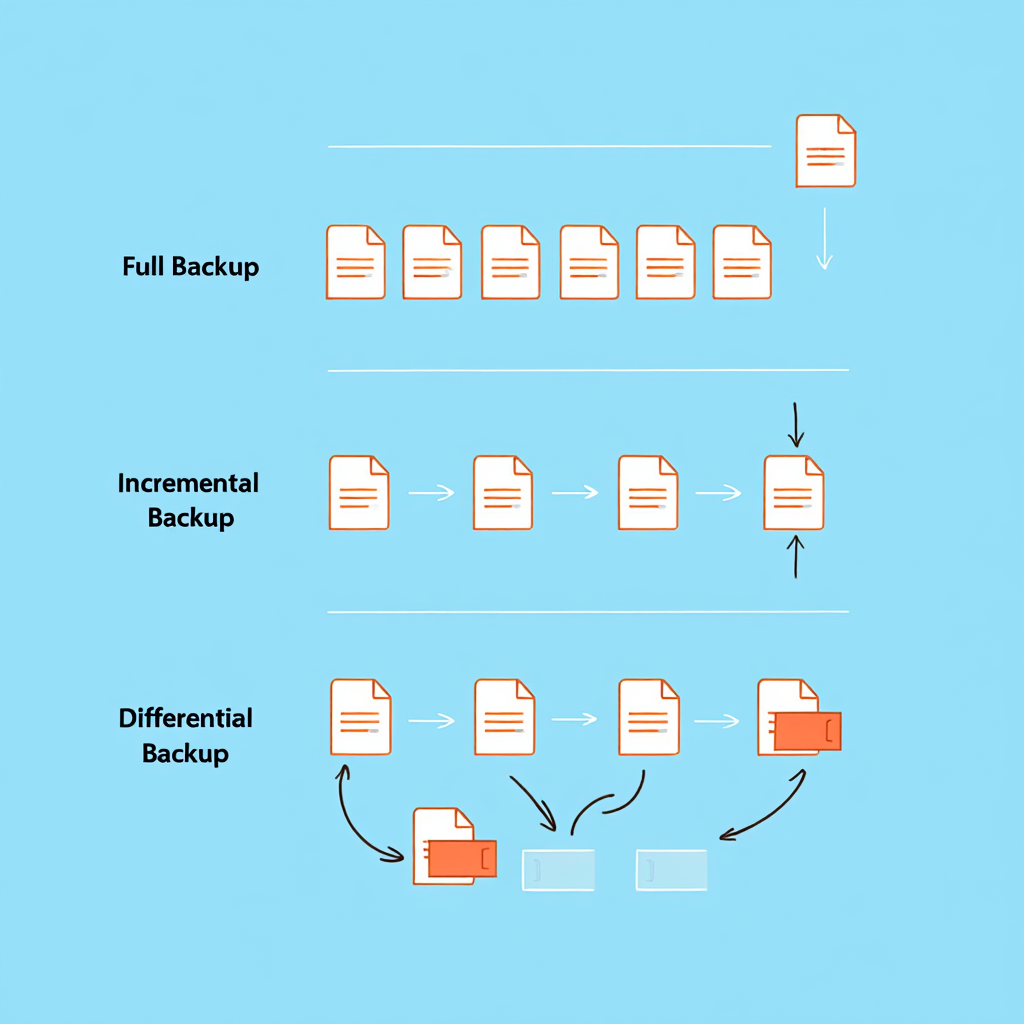
Understanding Full, Incremental, and Differential Backups
Different backup methods suit various situations. Full copies everything each time. Others build on that to save space and time. Knowing them helps users pick wisely. Free hdd backup software often supports all these varieties, making it versatile for beginners.
Breaking Down the Basics
A complete backup duplicates all selected files fresh. It stands alone for restores. Incremental versions only grab changes since the last run—any type. Differential ones capture shifts from the latest full copy. This means differentials grow bigger over time. Incremental setups need the whole chain for recovery. Experts say full backups shine for simplicity. One case: a small business runs full weekly, incremental daily. Restores happen fast without hunting pieces. Folks inquire why not always full. Storage fills up quick that way. The best hdd backup software lets you switch modes easily to fit your routine.
- Full Backup: Copies every file, ideal for first-time or standalone protection. Takes longest but restores easiest.
- Incremental Backup: Saves only new or changed items since previous backup. Speeds things up, uses less room.
- Differential Backup: Records changes since last full one. Balances speed and restore simplicity.
“Incremental backups are key for efficiency, but always pair them with periodic full ones to minimize risks.” – Carly Fiorina, former CEO of Hewlett-Packard.
When to Use Each Type
Start with full for baselines. Switch to incremental for daily routines. Use differential mid-week for balance. Tools like free hdd backup software handle these automatically. Pros warn against skipping fulls too long—chains break easily. In one example, a photographer lost increments due to a corrupt file. Sticking to schedules prevents that. Users ask about mixing. Absolutely—many tools allow custom plans. A reliable backup program tailored to your needs can automate this mix for better coverage. Expand on this by considering cloud integration for offsite options.
Applying Them in Practice
Open the backup program. Select full for initial setup. Choose files or partitions. Run it. For next, pick incremental. Set filters for changes. Monitor space usage. If differentials fit better, toggle that option. Test restores periodically. One expert tip: allocate double the data size for storage. This covers growth. Questions arise on speed differences. Incrementals finish quickest after the first. Using a solid data protection tool ensures these steps flow without hitches.
Overall, these methods keep data safe without overwhelming resources. Match them to habits for best results. This understanding elevates any backup system to pro level.

Scheduling Your Backups to Run Automatically
Automating copies removes forgetfulness from the equation. It ensures regular protection. Programs make this simple. Reliability improves with set times. Learn more about automatic data backup software to enhance your protection. The best hdd backup software includes robust scheduling features to make this effortless.
Planning the Right Frequency
Daily runs suit active users. Weekly for lighter ones. Consider file changes—docs shift often, photos less so. Stats reveal 35% of businesses facing disruptions couldn’t recover lost data without proper backups (2024, USA). Experts push for off-peak hours like nights. One company cut losses by 30% through automation. People wonder about power use. Most tools sip energy in background mode. For free hdd backup software, frequency ties into quota limits if any exist.
| Backup Type | Frequency Suggestion | Pros | Cons |
|---|---|---|---|
| Full | Weekly | Complete coverage | Takes more time |
| Incremental | Daily | Quick execution | Needs chain intact |
| Differential | Every few days | Easier restores | Grows in size |
“The importance of regular data backups cannot be overstated; they are the last line of defense against inevitable hardware failures and cyber threats.” – Dale Shulmistra, Data Protection Specialist at Invenio IT.
Tools and Setup Tips
Windows Task Scheduler pairs with any data protection tool. Open it via search. Create a task. Link to the software executable. Set triggers like daily at 2 AM. Best hdd backup software often includes built-in planners. AOMEI Backupper lets users pick days and times easily. Add notifications for completion. Test runs manually first. Pros advise multiple destinations. This follows the 3-2-1 strategy. Users ask if mobile alerts work. Some apps send emails. Expanding setups, include email reports for peace of mind.
Automation turns sporadic efforts into reliable habits.
Handling Common Hiccups
If schedules miss, check power settings—laptops sleep. Adjust for always-on. Space shortages halt jobs—monitor drives. Update software regularly. In a real scenario, a freelancer automated weekly and avoided a ransomware hit. Questions pop up on overrides. Pause if needed, but resume soon. A dependable backup program troubleshoots these issues with logs.
Automation turns protection into habit. It frees time while securing files. This approach maximizes any data safety tool’s potential.

Setting Up Your First Hard Drive Backup with AOMEI Backupper
AOMEI Backupper stands out as solid free hdd backup software. It handles Windows tasks smoothly. Features cover basics and more. Getting started takes minutes. Many view it as the best hdd backup software for entry-level users.
Exploring Key Features
The standard edition offers file, system, and disk cloning. It supports external drives seamlessly. Compression saves space. Encryption adds security. Reviews praise its interface—intuitive for beginners. One user backed up 500GB in under an hour. Experts rate it high for reliability. Folks question limits. Free version caps some advanced bits but covers essentials. As a backup program, it excels in user feedback across forums.
“Choosing reliable backup software is crucial; it’s not just about saving data, but ensuring quick recovery when disaster strikes.” – Kevin Mitnick, Cybersecurity Consultant and Author.
Step-by-Step Installation and Configuration
Setting up AOMEI Backupper is straightforward with clear steps. Follow this guide to get your first backup running smoothly. These instructions ensure users can protect their data using free hdd backup software without confusion.
1. Download and Install AOMEI Backupper
Visit the official AOMEI website. Find the free version download link under “AOMEI Backupper Standard.” Click to download the installer—about 100MB, so it’s quick even on slower connections. Run the .exe file. Follow the prompts, sticking to default settings unless you need specific tweaks. Installation takes under five minutes. Users ask if it’s safe. AOMEI’s site uses secure HTTPS, and the software is widely trusted, with millions of downloads.
2. Prepare Your External Hard Drive
Connect your external HDD via USB. Check it appears in Windows Explorer. If new, format it to NTFS for best compatibility—right-click the drive, select “Format,” choose NTFS, and confirm. Ensure it has enough space; double your data size is a safe bet. For example, 500GB of data needs a 1TB drive for growth. People wonder about USB versions. USB 3.0 is faster but 2.0 works fine.
3. Launch AOMEI Backupper
Open the program from your desktop or Start menu. The interface loads with a clean layout. On the left, you’ll see options like “Backup” and “Restore.” Take a moment to explore. If the app doesn’t open, check if your antivirus blocked it—add an exception if needed. This step ensures you’re ready to configure your backup.
4. Select Backup Type
Click the “Backup” tab on the left. Choose “Disk Backup” to copy an entire drive or “File Backup” for specific folders. Disk Backup is great for full system protection, including Windows itself. File Backup suits personal files like photos or docs. Users often ask which to pick. Start with Disk Backup for comprehensive coverage.
5. Choose Source and Destination
Select your main drive (usually C:) as the source. Click “Add Disk” and pick it from the list. For destination, choose your external HDD. Click “Step 2” to set it. Ensure the external drive has a clear label, like “Backup_Drive,” to avoid mix-ups. If the drive doesn’t show, reconnect it or check USB connections.
6. Configure Backup Options
Click “Options” at the bottom. Enable compression to save space—set to “Normal” for balance. Turn on encryption if sensitive data is involved; set a password you’ll remember. Schedule backups here if desired—daily or weekly. Experts suggest enabling “Check backup integrity” to verify copies. Users question compression impact. It slightly slows the process but saves significant space.
7. Start the Backup
Hit “Start Backup” in the bottom right. A progress bar shows the status. A 500GB drive might take 30-60 minutes on USB 3.0. Don’t unplug the drive during this. If errors pop up, check for loose cables or low disk space. Save the log file (accessible via “Logs” tab) for troubleshooting.
8. Verify the Backup
After completion, click “Home” and select “Restore.” Test if files are accessible. Try opening a small file from the backup. This confirms your setup works. Pros stress this step—backups are useless if unreadable. Users ask how often to verify. Monthly checks catch issues early.
This process sets up a reliable backup program with minimal effort. Keep the external drive safe and disconnected when not in use to avoid ransomware risks.
Advanced Tips for Better Results
Enable schedules post-setup. Use filters to skip temp files. Clone for migrations. Test restores—boot from backup media. Pros suggest verifying integrity after. In one case, a home user recovered from a crash flawlessly. Questions on updates—keep current for fixes. Integrating with other tools elevates this data protection solution.
Testing restores regularly confirms your setup works when needed.
FAQ
How does free hdd backup software differ from paid versions?
Free versions of HDD backup software, like AOMEI Backupper Standard, cover core tasks such as file and disk backups, scheduling, and basic compression. They’re great for home users or small businesses with straightforward needs. Paid versions add advanced features like real-time synchronization, cloud storage integration, or support for network drives. For example, a free tool can back up your photos and documents reliably, but a paid one might sync changes instantly or offer enterprise-grade encryption. Users often ask if free tools are trustworthy. They work well for most personal setups—just check user reviews to confirm consistent updates. Paid options suit those needing frequent, large-scale backups or specialized recovery features.
Why pick the best hdd backup software over built-in Windows tools?
Third-party tools like the best hdd backup software offer more flexibility than Windows’ built-in File History or Backup and Restore. They support multiple backup types—full, incremental, differential—and often run faster with better compression algorithms. For instance, AOMEI Backupper can shrink a 100GB backup to save space, while Windows tools might not. They also provide user-friendly interfaces and detailed logs for troubleshooting. Users wonder if Windows tools are enough. For basic needs, yes, but third-party options excel at scheduling automation or handling large drives. Pick software with strong community feedback for peace of mind.
What makes a backup program reliable?
A reliable backup program needs consistent updates, positive user reviews, and proven restore success. Check forums like Reddit or TechRadar for real-world feedback—look for tools with at least 4-star ratings across hundreds of reviews. Update frequency matters; developers should fix bugs regularly. Test restores yourself to confirm data integrity; a good program makes this simple. Users ask how to spot red flags. Avoid tools with poor documentation or no support channels. For example, AOMEI’s active updates and community support make it a top choice for a dependable backup program.
How often should backups run?
Backup frequency depends on how often your data changes. Daily backups suit heavy users like freelancers or gamers who update files constantly. Weekly runs work for casual users with stable data, like family photos. Experts recommend aligning with your habits—daily for work files, monthly for archives. A small business owner might schedule nightly incrementals to catch changes without hassle. Users ask if over-backup is a problem. It can fill drives, so monitor space and use compression. Set a schedule that balances protection and storage.
Why use incremental over full backups?
Incremental backups save only changes since the last backup, making them faster and less storage-hungry than full ones. They’re ideal for daily use after an initial full backup. For example, a 10GB document folder might only need 500MB for daily incremental updates. Full backups, while thorough, take longer and fill drives quicker. Users ask if incrementals are riskier. They require the full backup chain, so store it safely. Pair with the best hdd backup software for automation to streamline the process.
What better protects against loss—HDD or DVD?
Hard drives are better for most users due to massive capacity and speed. A 2TB HDD holds years of data, while DVDs max out at 4.7GB and degrade over time, especially in humid conditions. HDDs are plug-and-play, perfect for frequent backups with free hdd backup software. DVDs work for small, archival copies you might mail or store offsite. Users ask if DVDs are cheaper. Initially, yes, but HDD prices drop yearly—a 1TB drive costs under $50 now. Use HDDs for daily needs and DVDs for long-term, cold storage to follow the 3-2-1 rule.
To see how to set up free HDD backup in practice, watch this video. It demonstrates all steps using AOMEI Backupper, including creating backups, scheduling automatic runs, and applying filters to save space. This reinforces the concepts covered in the article.
Backing up on Windows keeps files safe from surprises. Free hdd backup software like AOMEI simplifies the job. Understand storage choices, backup varieties, and automation for strong defense. Experts stress regular habits and testing. Grab a tool now. Set it up. Sleep easier knowing data stays secure. A good backup program becomes your silent guardian.